Tuesday, May 20, 2008

Healthy Images and Healthy Choices

Food is an important part of a balanced diet. ~Fran Lebowitz

Part of the secret of success in life is to eat what you like and let the food fight it out inside. ~Mark Twain

Pop Quiz! Name 3 ways to lose weight and get ‘healthy’ right now!

Does your list include any of the following? South Beach or Atkins’ Diet, Weight Watchers, Jenny Craig.

It seems that our society has become increasingly obsessed with weight and body image. Where did this come from, and even more importantly, where does this leave us?

I can understand the need to be healthy, and I too would love to lose some unnecessary body baggage. But how do we classify what is healthy? Does this mean stick thin, under a certain body weight, or the ability to perform some type of exercise at a certain level? And more importantly, how did food come to be the most commonly associated object to getting healthy. Sure, it plays a large role, but what about fitness and keeping your body in shape, getting enough sleep, preventing stress and mental of emotional problems, boosting immunity to sickness, and feeling confident in your own skin. This may sound very 7th grade health class, but you can’t be healthy unless you take into account this whole spectrum, and decide how you ought to measure yourself in that context.

In order to avoid sounding like an old gym/ health teacher, or a psychological counselor, I would like to focus on the eating aspect of health. (First off, I would like to say that I have tried the South Beach Diet, so I am not just speaking off of assumptions here.) As for the fad diets, the South Beach and Atkins, the all-carb, the all-juice, the take-away-your-favorite-food diet, I just don’t understand why anyone should do this. I admit that when I did the South Beach diet I also lost weight. But one morning I woke up and really wanted a bagel, essentially putting an end to my carb fasting. So why do we limit ourselves like this? Why do we take food away that we know aren’t actually hurting us, except by maybe putting and extra pound on here of there. Is there anything fundamentally unhealthy about carbs? No. Will you gain a lot of weight if you eat carbs like you drink water? Yes. So I preach moderation.
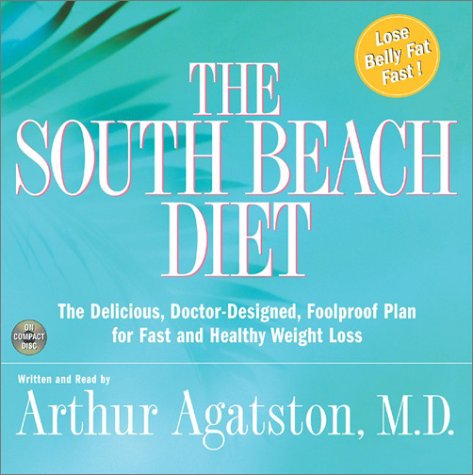
Eat what you want, love what you want, but in appropriate portions. Eat pasta for dinner if you love it, but skip the bowl of cereal and deep-dish pizza that same day. My feelings are that if you deprive yourself of something, the more you will want it, and when you get it, you lose control. You will overload on what you couldn’t have before. That’s what happened with the South-Beach-ending-bagel incident.

So now I eat what I want, just not as much. I try to balance my meals, which is extremely hard at a college cafeteria where you have little to no control over what composes your dinner. But I do my best, always trying to keep that silly food pyramid in the back of my mind. And if I indulge, I hold back later.
Why not emphasize the pleasures of eating food, rather than turning it into our enemy. We have to realize that when people, especially grown adults, show so much concern with their health, or more specifically their weight and dress size, a certain message is sent to others, most often young children, and young girls and teens in particular. Is this the kind of message we want to send? Food is dangerous in terms of keeping a perfect body image, and so it’s best to avoid possible problems by dieting, or worse, by eating. Talk about unhealthy. If we want to understand why there are so many young girls who suffer from eating disorders and the like, we ought to just take a look at how we present our own relationships to food.

Food is not our enemy. And I really think its time that we get this message out. We shouldn’t focus on how people can cheat the scale by cutting out food from the diet, or showing that it would all be easier if you had Jenny Craig prepare and ship frozen foods to your home in order to eat healthfully. Instead, we should highlight the benefits of food, show how eating can be healthy, teach all of our kids how to cook for themselves and how to recognize appropriate portions and the healthy from the non-healthy foods.

Not Enough to Feed the Need

It is not necessary to advertise food to hungry people, fuel to cold people, or houses to the homeless. ~J. K. Galbraith

I went to the bank and asked to borrow a cup of money. They said, “What for?” I said, “I'm going to buy some sugar.”
~Steven Wright
If you haven’t noticed yet, prices are going up. Prices of everything, from gas to food. It seems like an unlikely association, but it makes sense that even the food industry would be affected by changes in the national and global economy. I, in my limited view from my tiny dorm window, admit that I have not noticed these to be pronounced as those who live in the real world. I have no comparison because it seems like all the food on campus, in both the dining halls and the few convenience shops has always been overpriced. But the truth is, food prices are rising, and everyone from the American family to the hungry in third world countries are feeling the pressures of these increases.


An article in USA Today on April 28, 2008 cited changes in prices, particularly of white bread, which increased 16.3%, milk, which rose 13.3% and eggs, which rose 34.8%, all in the past twelve months. That difference in actual price may only be a few cents, but imagine if you are the parent of a large family- those cents add up. If you are at an income level close to poverty, those few cents could be more than your income could account for. And what about the children and families in third world countries, where food is not easy to come by, and certainly not easy to pay for when it does come by? These circumstances bring up more issues than just food price, confronting issues of uneven food distribution, especially based on class and wealth.

Call it inflation or the effects of a down-turning economy; nobody can really pinpoint the cause of the price increases. Some point to ordinary inflation over time, but even that must stem from another underlying source. Others suggest increases in gas and fuel prices, which affect both harvesting, production and processing, as well as transportation of foods. I think some definite possibilities stem from natural limitations of supply brought about by natural disasters, or reactions that downsized operations after slower years of production. One possible source, though it seems largely opposed by researchers and experts is the idea that increased production and distribution of grains, such as corn, to biofuels has greatly impacted the food industry as a whole. If this is true and a larger percentage of corn and grains are being focused towards ethanol production, it could explain why prices of grains (breads and cereals) are rising, as well as how other prices rise in order to match.

Around the world, food has become a precious commodity. We constantly hear about those less fortunate than us, constantly remind others that “there are starving kids in China,” and in New Orleans for that matter. But now everybody is suffering. Some grocery stores are even limiting the amount of some products that costumers can purchase. Restaurants are suffering too, both from lack of customers and from rising prices of food suppliers. And those who have always struggled to feed themselves and others? They now have at even worse.

The question, now, is what can we do to avert further problems. Sure, aid would be nice, but how can we help others if we can’t guarantee that we can provide for ourselves, particularly those that are really struggling in our own country from hunger and poverty. Another possibility would be to research other sources of energy, especially if a large portion of our grain supply is going towards the production of biofuels, and so that we are not dependent on foreign or limited energy sources for purposes of production and distribution of food supply, but this suggestion treads dangerously into political waters. But for now, it seems as if we will just have to deal with these changes. But maybe we’ll get something out of it too, perhaps learning how to stretch and make the most of every little thing we have, or to grow what we can of our own- WWII Victory Garden style.

In the meantime, if you want to help out in even the smallest way, play the Free Rice Game. It will make you feel better about helping humanity, and will also boost your vocabulary level! Check it out.

Help end world hunger

Monday, May 19, 2008

Going Green

Hey farmer farmer
Put away that DDT now
Give me spots on my apples

But leave me the birds and the bees
Please!
~Joni Mitchell
It seems that everything these days is going green, reaching towards sustainability in any possible way. This is no different in the food sphere. From the source to the disposal, food has gone green, and not just the veggies! (Get it?!)

Perhaps beginning with Rachel Carson, at least in the US, but maybe even earlier abroad, science has been raising awareness of the problems of how we produce our food. All those pesticides and herbicides that were supposed to prevent competition between our crops and those pesky weeds and pests are slowly fading into a thing of the past. All that DDT… turns out not so good for you. Now farmers and even family gardeners are turning to new methods of natural and environmentally friendly pest control. In one of my high school Environmental Science classes, we learned that one of these techniques is to use natural predators of plants and other pests. For example, some farmers use geese and other such duck-like creatures to prey on the insects that destroy their crops. Another plus? The waste (manure) fertilizes the ground… naturally.

At home, my family unfortunately lacks a gaggle of geese which will cooperate and actually eat the pests, rather than just … defecating… all over the place. Instead, my mom has come up with other alternatives, natural alternatives to pesticides. Apparently many pests dislike hot pepper, so she sprinkles hot pepper flakes throughout the vegetable garden. And to keep away the larger pests, deer in particular, we usually brush the dog near the garden. The scent of the dog’s hair keeps animals away who depend on scent to determine territory. I know there are many other methods, as I am sure my parents will remind me; and even though my high school environmental science teacher may be disappointed in my short list, I must carry on.

Here’s another way to go green with your food: BUY LOCAL. As hippie-esque and bumper sticker-y as this cliché is, it is true. One of the simplest ways to save the environment is to buy from local farms, produce stands, or at least pick the produce that is labeled with a local origin at the grocery store. When you get your resources from nearby you can count on the fact that gas emissions will be low- no driving or flying across country necessary! Of course, if you can, a home grown garden is another way to prevent those gas emissions, because when you want a green pepper or some fresh basil all you have to do is take a pair of scissors out to your backyard.

In my family, we have a belief that leftovers show love. We would never serve leftovers to a guest. No, they are only for family. But leftovers also show a love for the environment. You know how it goes, Reduce, Reuse, Recycle! Don’t throw away those scraps, the bottom of the mashed potato pot, the stale bread, or the lemon wedge. Reheat that steak and serve it with eggs for breakfast, make potato pancakes, croutons or bread pudding with the stale bread, and flush the lemon down the disposal (it’ll make the kitchen smell citrus-y fresh!). And if you really dislike the idea of leftovers, for whatever reason, cook less, fix smaller portions, make your kids eat those veggies instead of giving them the option to pass and let them go to waste (there are starving kids in New Orleans, you know).

My final recommendation: COMPOST! It is so easy, and I bet you didn’t even know all of the things you can compost. If you want a good overview of composting in general, what to expect, how to, what you need, what you should, could and definitely should not put into that pile, visit Garden Web.

While you're at it, check out my friend's related blog, and look through the GREEN lenses!

Saturday, May 17, 2008

It's bizarre that the produce manager is more important to my children's health than the pediatrician. ~Meryl Streep

For those of you who missed it, this past week’s episode of Top Chef was all about healthy cooking and healthy eating. It seems like we are constantly hearing stories these days about increasing obesity rates, especially in children, not to mention other health problems that go along with eating well, or rather, not eating well.


There really doesn’t seem to be any point in denying the problem’s existence. We can no longer chalk it up to personal body image conflicts, though these certainly don’t help matters. So then, what has caused this collective weight gain?
Eating healthfully is not a one step process. Our food journeys through stages of production and harvesting, preservation and handling, buying, preparing, and lastly consuming.
Let’s start at the beginning. Now, I am no expert, but lets see if we can track one food item from beginning to end. How about an apple.
We start at the orchard. There is a seed, and skipping the birds and bees of plant growth, we will eventually have an apple tree. But wait- what about the pests? We might spray a pesticide to ward off those nasty insects. And to ward off all the weeds that might out-compete the tree itself, we add some herbicides to the mix. Nothing can prevent the apple from growing in peace- at least until it is pickin’ time.
This is where it starts to get complicated. The apple has a variety of directions to go, each of which I would like to explore a little.
  1. The beautifully plump, red apple takes a short drive down the dusty sunlit lane to a roadside fruit stand. There it is bought, washed, and consumed for a light and healthy afternoon snack. Simple enough, no?
  2. That same red apple gets packed into bushels of produce, placed on a truck and shipped 200 miles away. The apple arrives, a little older, and a little bruised, perhaps, but relatively little harm was done (except for the gas emissions resulting from the truck ride). That apple is bought, taken home, eaten for an afternoon snack, or perhaps baked into a pie. That pie, combined with all that butter and sugar (trust me- there’s a lot of both), tastes mighty delicious. One after-dinner slice quickly turns into 3, each decreasing in size, but 3 nonetheless. True, the fruit has vitamins that are definitely good for you, but the butter and sugar are also good for those love handles.
  3. That same apple from that orchard gets shipped off to the nearest juice-making factory. They do whatever they do at those types of places, and the next time we see that apple it is in juice form. But don’t forget about the sugar, and high-fructose corn syrup that got mixed in, too. Adds to the flavor, you know- and the tummy.
Food has a variety of avenues towards becoming our enemy these days.
There is always a danger these days of unhealthy pesticides and the like, which affect our heath in different ways- not necessarily in weight gain or cholesterol, but in chemical balances.
There are health dangers in the ways we prepare our food. Often we use too much of certain ingredients, especially in places where substitution is possible. Why not cook with olive oil instead of a stick of butter or find another condiment to use instead of mayonnaise? (Even if Hellman’s claims the health benefits of its product, I am just not a fan of mayonnaise at all.) How about holding back on the amount of sauce you slather across those ribs, or on top of those Chinese noodles.
With all the processing our food goes through these days, you can never really be sure of what you are eating. High fructose corn syrup is one ingredient that I think everyone can live without.


One of the best ways to insure healthy eating is to make your food yourself. I know this is impossible in certain cases- not everybody has a garden for fresh fruits and veggies. But you can make sure that what you make with your food has healthy ingredients, is cooked in a healthy manner, and most of all, you can make sure that your meals have enough of each food group- as cliché as that sounds.

Regional Foods, cont'd!

In my exam-cramming-procrastination today, I came across another blogger's take on regional foods.
Check it out: Mango & Ginger
I've also linked to it under "Can't Get Enough?" Take a look at the other posts, too!

And while you're at it, take a look at this map of regional foods from the New York Times. Not only does the map divide the nation into food regions, it shows the unfortunate disappearance of some of these key ingredients in each food due to endangered species.