Wednesday, May 21, 2008

She's Back!

I missed the beginning of Top Chef! All because the American Idol finale was so shocking that it ran over its usual time slot. By the way, I am sending a huge congratulations to David Cook, the winner, and to all those who voted for him, allowing him to beat baby-faced David Archuleta.

The Quickfire Challenge tonight was working the short order egg station at one of Chicago's favorite breakfast joints, Lou Mitchell's. Antonia won, with an advantage going into the Elimination Challenge, which if you hadn't figured it our from last week's teasers, was Restaurant Wars! Antonia got to pick her team, and surprise surprise, she picked the best, Richard and Stephanie. Which left the other team with Lisa, Dale, and Spike, all three of whom really struggle on a basic human level to interact with others, and to produce good food. So really, I guess this wasn't a fair challenge, with the teams so obviously loaded. But, what can we do? Nothing!
So as you might have predicted: Stephanie, Richard, and Antonia were the WINNERS!!!
Under the guidance of executive chef Antonia, and the extra help from past cheftestant Nikki, this team came out on top. The dishes included linguine with shrimp and sausage, beet salad, trout, braised lamb/lamb loin, and a gorgonzola cheesecake with banana scallop (despite poor plating style). Stephanie came out the ULTIMATE WINNER! with a trip to Barcelona, Spain! She's back in the game with another Elimination Challenge win!
Now that leaves Dale, Lisa, and Spike, the LOSERS!!! And as shocking as this may come out to be, Never have a actually preferred Spike to others chefs and actually rooted for him in comparison.
From the atmosphere and design of the front of the house, to the composition and construction of each dish, this team just didn't have what it takes. I particularly liked how the judges (Padma, Ted Allen, Anthony Bourdain, and Jose Andres) compared some of the decor to the back of Prince's dressing room, or something insane like that. As for the food, two disasters stick out in my mind: butterscotch scallops and whatever the sticky rice dish was intended to be. The scallops just sound weird, and Bourdain thought his plate looked like a melted candy bar. Over shrimp and scallops. Tasty. Not. The sticky rice was disastrous, as one customer called it "baby food garnished with potpourri". The shot I saw of it looked like the bananas I smash before mixing them into my banana bread mixture. That is NOT how rice should look.
As far as team atmosphere goes, it was bitter, and ugly, consisting of lots of yelling, blaming, eye rolling and shaking of the head. Spike was complimented by the judges for his decision to get the hell out of the kitchen and the line of fire between Lisa and Dale. A highlight of this battle was when they both tried to outdo each other by blaming each other with cliches.
Dale: You are only as strong as your weakest link.
Lisa: Yeah? Well You are also only as good as your leader.
In the long run, neither won. Dale was told to pack his knives and go, but Lisa only managed to salvage her place in the top 5, leaving behind any favorable impressions and dignity.
It is just a shame that we didn't see any true humanity from Dale until he got kicked off. Apparently he hates saying goodbyes, and i really going to miss the people and the experience, he admitted while tearing up. Had I known he had it in him to be a human being, he might not have sunk so far down my list.

For more recap, analysis, blogs, and multimedia, check out Bravo's report.

So long Maryland Dining Services

One cannot think well, love well, sleep well, if one has not dined well. ~Virginia Woolf
I come to you in my last post of my freshman year, the last day, the last night in the dorms, and more importantly, the last time I will have to eat at the dining hall… at least for another 3 months.

So long to dining hall food! (at least for the next 3 months). I just ate my last dinner of campus foods, and I am so glad that I can now take a break. Let me explain.

It is not that the food is horribly atrocious. It just isn’t all that good. And it really really gets old. Cafeterias seem to get bad names for horrible food. You know those horror stories. But what else can you expect when the food has to be prepared on a scale large enough to feed thousands of hungry young scholars. So in this situation, it is understandable when the quality sometimes suffers. But I still don’t think it is right to have to settle for barely tolerable food for nine months. The food we eat at school serves the same purpose as the food we eat at home, and I would argue that this requires an even greater emphasis on providing satisfying, filling, AND healthy foods.

The dining hall food on my campus sometimes seems like it doesn’t provide any of those characteristics. Now, I would like to take a moment and point out that our dining services is probably much better than many others across the country. Sometimes they offer a really great meal, and they do try to incorporate special events and community dining into their program. And I think everyone appreciates that. But every other day, when there is no special catering, and you are eating the same meal for the 3rd time in one week, you can definitely find something wrong with dining services.

To begin with, the value meal, which you might think of as a ‘blue plate special’ is a on a repeating 3 week schedule. Which means in the 9 months you spend on campus, you will have the same exact meal… well I’m not exactly sure how many times (I am NOT a math major), but let’s just say you will have it a lot. Towards the end of the semester, the dining hall seems to stop ordering food from its suppliers. Fresh fruit becomes rare, the sweets counter starts to run out, some food stations begin to close, and that good old menu starts repeating all the left over meals. Shouldn’t the end of the year deserve better food? After all, this is the time when students must deal with more stress with finals, and being well fed is essential to doing well and staying focused, at least.

Another major problem I have is with the lack of balanced healthy plates available daily. Since I am largely addressing the value meal, let’s talk about the options here. Usually, with almost every dinner meal, there is an option of some type of vegetable, mixed veggies, broccoli, cauliflower, or peas. Honestly, however, these vegetables are also usually less than desirable. A few days ago, the broccoli that landed on my plate was somehow so bleached it almost looked like cauliflower. The mixed veggies are usually so soft, watery, and overcooked that it could almost be a soup. Sometimes, there just aren’t any vegetables at all. Other times you have to go out of your way to get edible vegetables on to your plate, by visiting different food stations or the salad bar to pick out some raw broccoli, spinach or pepper slices. This can be a serious and time consuming problem when your half-hour dinner break was taken at the expense of your studying time.

So what would I (reasonably) do if I were the head of campus dining services?
  1. Make better Asian noodles/ stir fry and rice dishes, because the occasional option now usually keeps everyone away in favor of burgers and fries.
  2. Give a greater variety of vegetables with every meal, insuring that they don’t sit out all day in the hot plate, to prevent ‘mushiness’.
  3. Bring in catering services and special events more often that every two or three months.
  4. (and sushi in the dining hall doesn’t count. I will eat it, but really… just think about it. Sushi?... in the dining hall? Sounds a little sketchy to me)
  5. Offer at least one new original, or special dish every week to break the monotony of the 3-week-schedule.
  6. Offer a waffle-maker all day long. (Just because I really like waffles).

And just for the record, I would like to point out a few good things about Maryland dining services:
  1. My last dinner was not all that bad. And the food looked kind of good on the plates. (see above pictures).
  2. They made 54,000 cupcakes in the shape of the university's seal. That is pretty impressive.
  3. The ice cream in fantastic, made in the University Dairy.
  4. The waffles, served at weekend brunch and occasionally weekday breakfasts, have Testudo (the school mascot at the center). He's my favorite!

Tuesday, May 20, 2008

Healthy Images and Healthy Choices

Food is an important part of a balanced diet. ~Fran Lebowitz

Part of the secret of success in life is to eat what you like and let the food fight it out inside. ~Mark Twain

Pop Quiz! Name 3 ways to lose weight and get ‘healthy’ right now!

Does your list include any of the following? South Beach or Atkins’ Diet, Weight Watchers, Jenny Craig.

It seems that our society has become increasingly obsessed with weight and body image. Where did this come from, and even more importantly, where does this leave us?

I can understand the need to be healthy, and I too would love to lose some unnecessary body baggage. But how do we classify what is healthy? Does this mean stick thin, under a certain body weight, or the ability to perform some type of exercise at a certain level? And more importantly, how did food come to be the most commonly associated object to getting healthy. Sure, it plays a large role, but what about fitness and keeping your body in shape, getting enough sleep, preventing stress and mental of emotional problems, boosting immunity to sickness, and feeling confident in your own skin. This may sound very 7th grade health class, but you can’t be healthy unless you take into account this whole spectrum, and decide how you ought to measure yourself in that context.

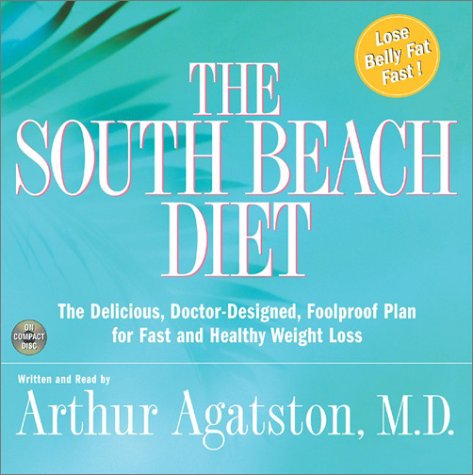
In order to avoid sounding like an old gym/ health teacher, or a psychological counselor, I would like to focus on the eating aspect of health. (First off, I would like to say that I have tried the South Beach Diet, so I am not just speaking off of assumptions here.) As for the fad diets, the South Beach and Atkins, the all-carb, the all-juice, the take-away-your-favorite-food diet, I just don’t understand why anyone should do this. I admit that when I did the South Beach diet I also lost weight. But one morning I woke up and really wanted a bagel, essentially putting an end to my carb fasting. So why do we limit ourselves like this? Why do we take food away that we know aren’t actually hurting us, except by maybe putting and extra pound on here of there. Is there anything fundamentally unhealthy about carbs? No. Will you gain a lot of weight if you eat carbs like you drink water? Yes. So I preach moderation.

Eat what you want, love what you want, but in appropriate portions. Eat pasta for dinner if you love it, but skip the bowl of cereal and deep-dish pizza that same day. My feelings are that if you deprive yourself of something, the more you will want it, and when you get it, you lose control. You will overload on what you couldn’t have before. That’s what happened with the South-Beach-ending-bagel incident.

So now I eat what I want, just not as much. I try to balance my meals, which is extremely hard at a college cafeteria where you have little to no control over what composes your dinner. But I do my best, always trying to keep that silly food pyramid in the back of my mind. And if I indulge, I hold back later.
Why not emphasize the pleasures of eating food, rather than turning it into our enemy. We have to realize that when people, especially grown adults, show so much concern with their health, or more specifically their weight and dress size, a certain message is sent to others, most often young children, and young girls and teens in particular. Is this the kind of message we want to send? Food is dangerous in terms of keeping a perfect body image, and so it’s best to avoid possible problems by dieting, or worse, by eating. Talk about unhealthy. If we want to understand why there are so many young girls who suffer from eating disorders and the like, we ought to just take a look at how we present our own relationships to food.

Food is not our enemy. And I really think its time that we get this message out. We shouldn’t focus on how people can cheat the scale by cutting out food from the diet, or showing that it would all be easier if you had Jenny Craig prepare and ship frozen foods to your home in order to eat healthfully. Instead, we should highlight the benefits of food, show how eating can be healthy, teach all of our kids how to cook for themselves and how to recognize appropriate portions and the healthy from the non-healthy foods.

Not Enough to Feed the Need

It is not necessary to advertise food to hungry people, fuel to cold people, or houses to the homeless. ~J. K. Galbraith

I went to the bank and asked to borrow a cup of money. They said, “What for?” I said, “I'm going to buy some sugar.”
~Steven Wright
If you haven’t noticed yet, prices are going up. Prices of everything, from gas to food. It seems like an unlikely association, but it makes sense that even the food industry would be affected by changes in the national and global economy. I, in my limited view from my tiny dorm window, admit that I have not noticed these to be pronounced as those who live in the real world. I have no comparison because it seems like all the food on campus, in both the dining halls and the few convenience shops has always been overpriced. But the truth is, food prices are rising, and everyone from the American family to the hungry in third world countries are feeling the pressures of these increases.


An article in USA Today on April 28, 2008 cited changes in prices, particularly of white bread, which increased 16.3%, milk, which rose 13.3% and eggs, which rose 34.8%, all in the past twelve months. That difference in actual price may only be a few cents, but imagine if you are the parent of a large family- those cents add up. If you are at an income level close to poverty, those few cents could be more than your income could account for. And what about the children and families in third world countries, where food is not easy to come by, and certainly not easy to pay for when it does come by? These circumstances bring up more issues than just food price, confronting issues of uneven food distribution, especially based on class and wealth.

Call it inflation or the effects of a down-turning economy; nobody can really pinpoint the cause of the price increases. Some point to ordinary inflation over time, but even that must stem from another underlying source. Others suggest increases in gas and fuel prices, which affect both harvesting, production and processing, as well as transportation of foods. I think some definite possibilities stem from natural limitations of supply brought about by natural disasters, or reactions that downsized operations after slower years of production. One possible source, though it seems largely opposed by researchers and experts is the idea that increased production and distribution of grains, such as corn, to biofuels has greatly impacted the food industry as a whole. If this is true and a larger percentage of corn and grains are being focused towards ethanol production, it could explain why prices of grains (breads and cereals) are rising, as well as how other prices rise in order to match.

Around the world, food has become a precious commodity. We constantly hear about those less fortunate than us, constantly remind others that “there are starving kids in China,” and in New Orleans for that matter. But now everybody is suffering. Some grocery stores are even limiting the amount of some products that costumers can purchase. Restaurants are suffering too, both from lack of customers and from rising prices of food suppliers. And those who have always struggled to feed themselves and others? They now have at even worse.

The question, now, is what can we do to avert further problems. Sure, aid would be nice, but how can we help others if we can’t guarantee that we can provide for ourselves, particularly those that are really struggling in our own country from hunger and poverty. Another possibility would be to research other sources of energy, especially if a large portion of our grain supply is going towards the production of biofuels, and so that we are not dependent on foreign or limited energy sources for purposes of production and distribution of food supply, but this suggestion treads dangerously into political waters. But for now, it seems as if we will just have to deal with these changes. But maybe we’ll get something out of it too, perhaps learning how to stretch and make the most of every little thing we have, or to grow what we can of our own- WWII Victory Garden style.

In the meantime, if you want to help out in even the smallest way, play the Free Rice Game. It will make you feel better about helping humanity, and will also boost your vocabulary level! Check it out.

Help end world hunger

Monday, May 19, 2008

Going Green

Hey farmer farmer
Put away that DDT now
Give me spots on my apples

But leave me the birds and the bees
Please!
~Joni Mitchell
It seems that everything these days is going green, reaching towards sustainability in any possible way. This is no different in the food sphere. From the source to the disposal, food has gone green, and not just the veggies! (Get it?!)

Perhaps beginning with Rachel Carson, at least in the US, but maybe even earlier abroad, science has been raising awareness of the problems of how we produce our food. All those pesticides and herbicides that were supposed to prevent competition between our crops and those pesky weeds and pests are slowly fading into a thing of the past. All that DDT… turns out not so good for you. Now farmers and even family gardeners are turning to new methods of natural and environmentally friendly pest control. In one of my high school Environmental Science classes, we learned that one of these techniques is to use natural predators of plants and other pests. For example, some farmers use geese and other such duck-like creatures to prey on the insects that destroy their crops. Another plus? The waste (manure) fertilizes the ground… naturally.

At home, my family unfortunately lacks a gaggle of geese which will cooperate and actually eat the pests, rather than just … defecating… all over the place. Instead, my mom has come up with other alternatives, natural alternatives to pesticides. Apparently many pests dislike hot pepper, so she sprinkles hot pepper flakes throughout the vegetable garden. And to keep away the larger pests, deer in particular, we usually brush the dog near the garden. The scent of the dog’s hair keeps animals away who depend on scent to determine territory. I know there are many other methods, as I am sure my parents will remind me; and even though my high school environmental science teacher may be disappointed in my short list, I must carry on.

Here’s another way to go green with your food: BUY LOCAL. As hippie-esque and bumper sticker-y as this cliché is, it is true. One of the simplest ways to save the environment is to buy from local farms, produce stands, or at least pick the produce that is labeled with a local origin at the grocery store. When you get your resources from nearby you can count on the fact that gas emissions will be low- no driving or flying across country necessary! Of course, if you can, a home grown garden is another way to prevent those gas emissions, because when you want a green pepper or some fresh basil all you have to do is take a pair of scissors out to your backyard.

In my family, we have a belief that leftovers show love. We would never serve leftovers to a guest. No, they are only for family. But leftovers also show a love for the environment. You know how it goes, Reduce, Reuse, Recycle! Don’t throw away those scraps, the bottom of the mashed potato pot, the stale bread, or the lemon wedge. Reheat that steak and serve it with eggs for breakfast, make potato pancakes, croutons or bread pudding with the stale bread, and flush the lemon down the disposal (it’ll make the kitchen smell citrus-y fresh!). And if you really dislike the idea of leftovers, for whatever reason, cook less, fix smaller portions, make your kids eat those veggies instead of giving them the option to pass and let them go to waste (there are starving kids in New Orleans, you know).

My final recommendation: COMPOST! It is so easy, and I bet you didn’t even know all of the things you can compost. If you want a good overview of composting in general, what to expect, how to, what you need, what you should, could and definitely should not put into that pile, visit Garden Web.

While you're at it, check out my friend's related blog, and look through the GREEN lenses!